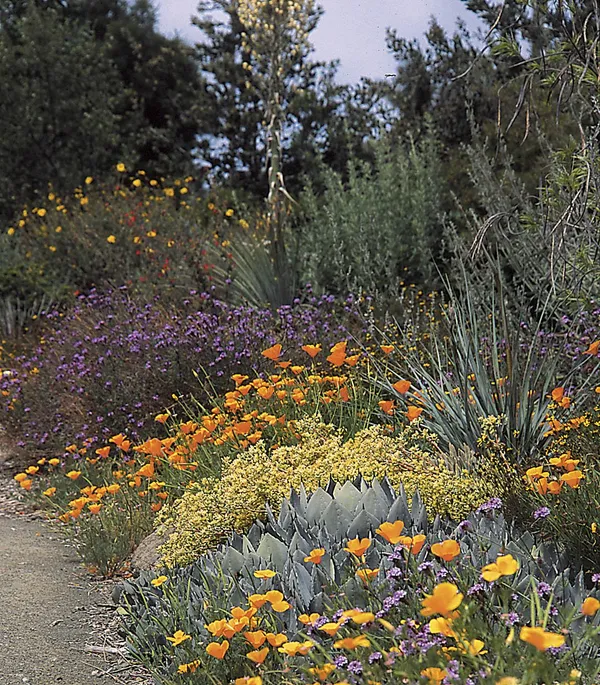
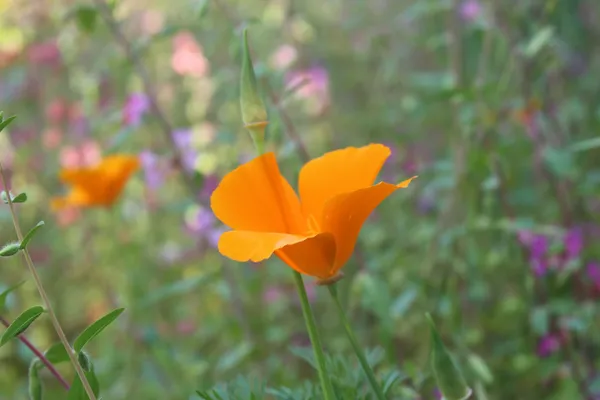
This garden was established in winter 2025/2026 in the parking lot of Willow Glen Elementary School. The planting area used to have a willow tree, but after the tree died, the area was left unattended. We planted a Coast Live Oak tree along with 9 other native plant friends.
Plants Featured (species)
Wildflowers
- California Fuschia (Epilobium canum) - Late season nectar source, tube-shaped flowers are a favorite of hummingbirds
- Gum Plant (Grindelia stricta) - This plant can form low clumps to a sprawling subshrub. Bright yellow flowers bloom from Spring through Fall depending on weather conditions
- California Sages (Salvia spp) - Aromatic shrub with blue-green leaves and purple flowers
- Hearst’s Ceanothus (Ceanothus hearstiorum) - Low growing and spreading shrub with early Spring purple flowers
- Yarrow (Achillea millefolium) - Yarrow is a popular plant choice among California native gardeners, whose abundant white flowers attract bees, butterflies, and other insects. It is durable and easy to grow. Yarrow has many alternative common names which reflect its long history as a medicinal plant.
- Blue-Eyed Grass (Sisyrinchium bellum) - This grassy looking plant is actually an iris with small purple flowers from March to May.
- Sandmat Manzanita (Arctostaphylos pumila) - A low-lying manzanita which forms flat bushes and patchy, creeping mats
- Evening Primrose (Oenothera elata var. hookeri) - Large yellow blooms in the late summer. Flowers open at night, offering pollen to nocturnal insects like moths
- Silver Bush Lupine (Lupinus longiflorus) - A member of the pea family, this plant fixes nitrogen! The large purple flower spikes attract pollinators
- Coast Live Oak (Quercus agrifolia) - A keystone species throughout coastal California, each spring and its acorns attract a wide variety of birds and butterflies - over 270 species rely on these trees for habitat and food.
Impact
Provides nectar and host plants for native bees and butterflies and serves as an outdoor classroom for ecology lessons.
Maintenance
This garden requires minimal maintenance once established— watering for the first few seasons and an annual late-summer/fall pruning of spent flower stalks and occasional weeding.
Maintenance
Minimal maintenance after establishment: seasonal weeding and occasional watering during extended dry periods.